Treat
Wastewater would be processed at a new water resource recovery facility.
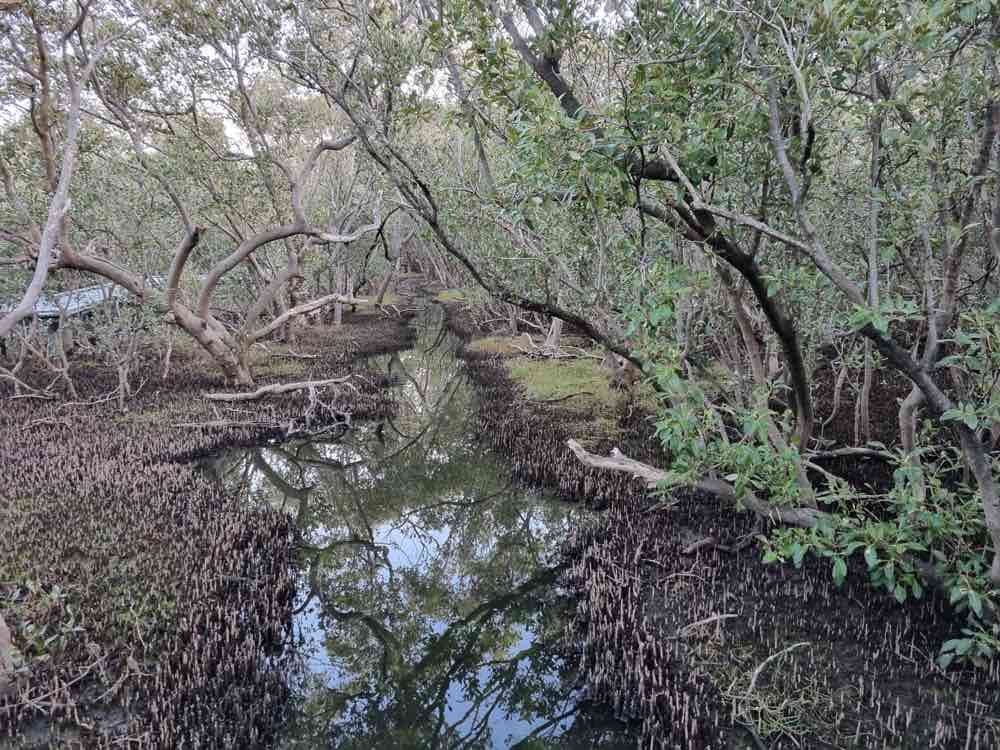
These are the places our families make memories—afternoons in the park, children learning to sail, waterfront walks and shared outdoor spaces. They deserve more than promises. Oppose Sydney Water’s proposed advanced-treated wastewater outlet into the Parramatta River at Meadowbank.
01 / UNDERSTAND THE PROPOSAL
Sydney Water proposes a facility at Camellia–Rosehill, a pipeline and a river outlet near John Whitton Bridge at Meadowbank. [1]
Wastewater would be processed at a new water resource recovery facility.
A pipeline would carry advanced-treated water towards Meadowbank.
The proposed outlet would discharge into the Parramatta River.
Up to 70 million litres a day, according to Sydney Water. This is treated wastewater, not a proposed raw sewage discharge. [1]
SYDNEY WATER’S PLAN / JULY 2026 UPDATE
The proposed alternative route reaches Meadowbank via Silverwater Park and George Kendall Riverside Park. The outlet remains near John Whitton Bridge.
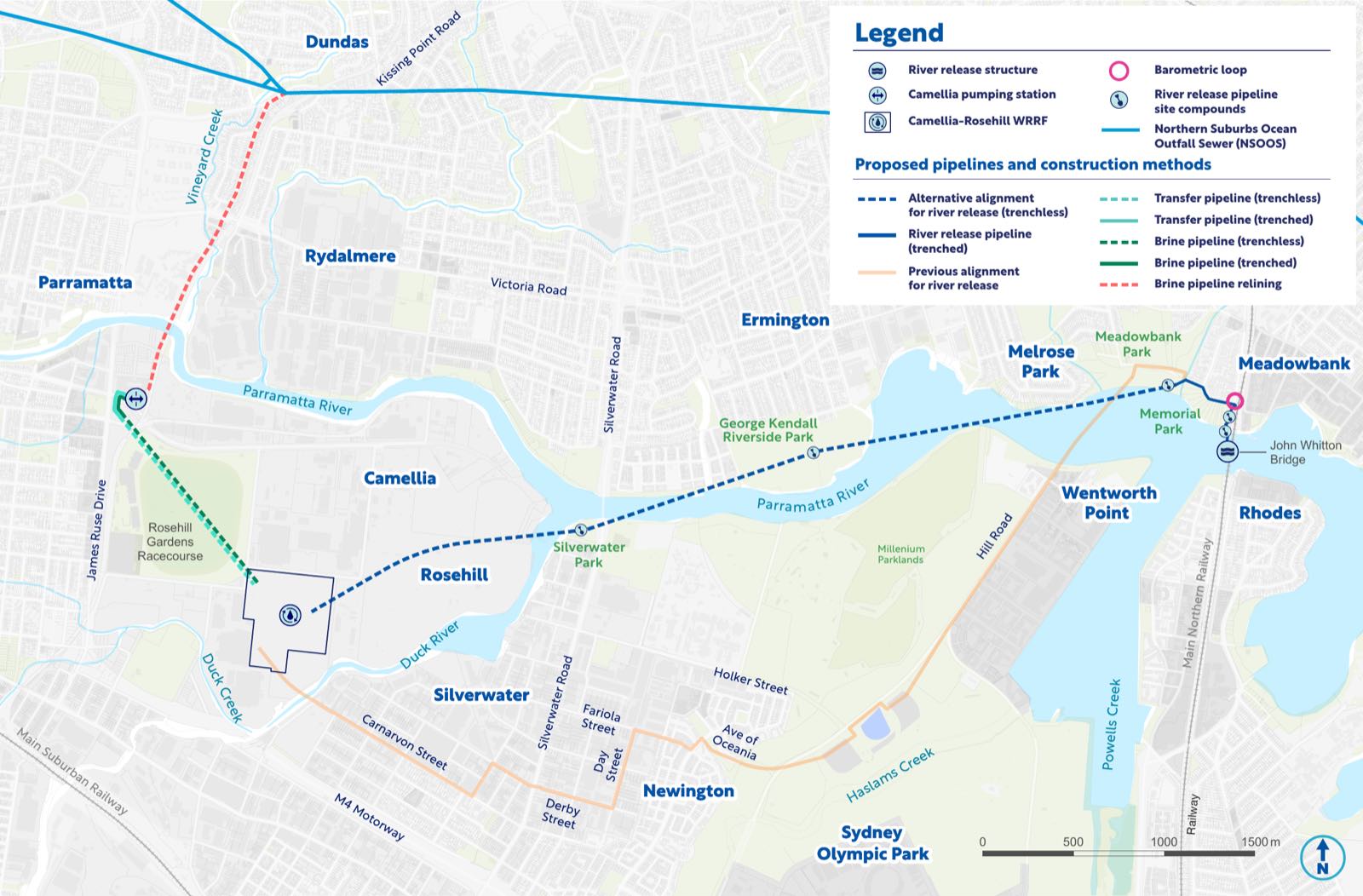
Linked from Sydney Water’s 3 July 2026 alignment update; retrieved 6 September 2026. Proposed plans may change. Check the latest project updates.
02 / WHAT’S AT STAKE
These are places where families make memories: afternoons in the park, children learning to sail, waterfront walks and shared outdoor spaces. Wildlife depends on connected habitat, too. They deserve more than promises.
Council raised concerns about canopy trees, riverbank vegetation and contaminated sediment disturbed during construction. If habitat is disturbed, recovery is not something a project can simply promise. [2]
Families, sailors, rowers, boaters and walkers depend on confidence in the river. Compounds and trenching may temporarily remove or disrupt access where works occur, while a treatment or diversion failure could affect recreation. [2]
Council sought clearer monitoring, response triggers and public notification arrangements. These are safeguards the community should be able to scrutinise. [2]
Council’s submission addresses the original EIS. The revised alignment needs to be assessed on its own evidence; earlier impacts may change.
ONE OUTLET / MANY COMMUNITIES
This decision reaches beyond one suburb. Families, grandparents, older residents, walkers, runners, sailors, boaters and people who care for our parklands all deserve a voice.
The proposed outlet is near John Whitton Bridge. Residents need the latest plans for the outlet, park works and public access. [1]
Homes, foreshore paths and recreation across the same river make these communities central to the decision.
Our campaign welcomes residents here who want a say in the future of the river and the parks and paths they use.
Its mangroves, saltmarsh and wetlands are important habitats alongside places for walking, cycling and spending time outdoors. They deserve explicit consideration in the assessment. [11]
Sydney Olympic Park’s wetlands are listed on the Directory of Important Wetlands in Australia. Badu Mangroves and Newington Nature Reserve belong in our understanding of this wider landscape—not just the apartment buildings around it. [11]
We want the assessment to identify which habitats and recreational places could be affected, by what pathways, and under which operating conditions.
These are communities and places with a stake in the decision, not a mapped pollution footprint or a claim of group endorsement.
CHALLENGE THE LOCATION
Sydney Water says the John Whitton Bridge location provides better mixing. Yet figures it supplied to the ABC reportedly show Meadowbank only marginally deeper than rejected Wentworth Point—and Bedlam Point and Pulpit Point up to four times deeper. [ABC]
A mixing advantage does not, by itself, establish that Meadowbank is the best location. Was Meadowbank environmentally optimal, or the preferred balance of environmental impact, construction difficulty and cost?
Publish the complete comparison with Bedlam Point and Pulpit Point, including mixing, pipeline length, cost, habitat, recreation and construction impacts.
Show comparable modelled results across tides, river flows and operating scenarios—including off-spec water and treatment interruptions.
Publish the scores and weightings for habitat, parklands, recreation, nearby communities, construction and cost.
The consultation report records a change from Wentworth Point to Meadowbank. Publish the decision record and explain what evidence changed the choice. [8]
Depth was one of several criteria, according to Sydney Water. A deeper alternative is not automatically a better one—but the trade-offs should be open to independent scrutiny.
Ask your representative for the evidenceSYDNEY WATER SAYS / THE RECORD SHOWS
The issue is not whether reverse osmosis can produce clean water. It is whether detection, diversion, maintenance and disclosure will work every hour, for decades—and who verifies them.
SYDNEY WATER SAYS
WHAT THE ABC REPORTS
For a water-quality issue, Sydney Water’s project lead said the fallback requires a manual override by operators. A power outage would be managed through the control system. “Can be diverted” is not the same as automatic, fail-closed isolation. Read the ABC report ↗
SYDNEY WATER SAYS
WHAT REMAINS UNANSWERED
Figures supplied to the ABC put Meadowbank at 4.2–5.1 metres and rejected Wentworth Point at 4.2–4.9 metres. Bedlam Point and Pulpit Point were reportedly up to four times deeper. Depth was one of several criteria—but the full weighted comparison should be public. See the reported figures ↗
SYDNEY WATER SAYS
WHAT CHANGED—and WHAT DID NOT
More tunnelling is a real improvement. But the proposal still uses four parks, retains a short open-trench section near Memorial Park, and keeps the same permanent outlet beside John Whitton Bridge. Read Sydney Water’s update ↗
SYDNEY WATER SAYS
WHAT APPROVAL STILL LACKS
The final EPA discharge licence and enforceable limits would be set after planning approval and before discharge. The community is being asked to assess safety before the final operating rules are known. Read the regulatory position ↗
SYDNEY WATER’S RECORD
Previous incidents do not prove the proposed Camellia plant will fail. They do prove that equipment failure, inadequate maintenance and incomplete disclosure are credible risks—not abstract possibilities.
Untreated sewage entered Toongabbie Creek and the Parramatta River. Sydney Water was convicted of two water-pollution offences. ABC report ↗
An eroded rising main released untreated sewage into Arnotts Reserve, Powells Creek and the Parramatta River. A significant fish kill followed and the reserve closed for weeks. NSW EPA finding ↗
A split main released untreated wastewater into local waterways. The EPA said the pipe had failed several times since 2000 and Sydney Water had not properly investigated the causes or sufficiently maintained it. NSW EPA finding ↗
Inadequately maintained infrastructure broke down. Sydney Water was later convicted of a licence breach and failing to provide EPA-requested information and records. NSW EPA finding ↗
The EPA identified Sydney Water’s land-based sewage-treatment network—and later the Malabar system—as the likely source. The precise release mechanism was investigated separately. Preventative works were ordered in 2026. EPA investigation ↗
Require automatic fail-closed diversion, enough fallback capacity for an extended outage, independently validated continuous monitoring, a live public dashboard, predefined recreation warnings and publication of every alarm, exceedance, diversion and manual override.
The point is accountability, not equivalence. These incidents involved different assets and treatment systems. They do not show that advanced-treated water is the same as raw sewage. They show why operational promises cannot substitute for enforceable, independently checked protection.
03 / OUR POSITION
These are the places our families make memories. Do not approve or construct the proposed Meadowbank river outlet. Redesign the project for maximum practical beneficial reuse, and independently assess any residual-discharge location for effects on communities and ecology.
Add your voiceDo not approve or construct the proposed river outlet. Seek refusal or an amendment that removes Meadowbank from the project.
Use advanced-treated water beneficially to the maximum practical extent, then independently assess residual-discharge locations for community and ecological effects.
Publish the evidence and require enforceable monitoring for any future redesign. Safeguards must not become a reason to permit the Meadowbank outlet.
04 / BUYING BY THE RIVER?
Considering a home in Meadowbank, Rhodes, Wentworth Point, West Ryde, Ermington or Sydney Olympic Park? Waterfront amenity is part of what you are choosing. Ask the developer or seller to explain the proposal and the latest construction plans in writing.
These are communities with an interest in the river, not a mapped pollution zone. We make no claim that this proposal will reduce property prices.
05 / TURN CONCERN INTO ACTION
The original EIS exhibition is closed, but the assessment continues. The outcome we seek is refusal or amendment removing the Meadowbank outlet: contact the project team and your own MP, ask them to oppose Meadowbank, raise refusal or amendment with the Minister for Water and the Minister for Planning, and reply to you in writing. Any alternative must maximise practical reuse and be independently assessed for community and ecological effects.
Send feedback directly to the GPOP project team or call 1800 172 263.
Email the project teamThe original submission period is closed. Keep checking for an Amendment Report or another opportunity to comment.
Open the Planning PortalSend this evidence to neighbours, river users and anyone who cares about the Parramatta River.
CONTACT AFFECTED-AREA MPs
Use your own electorate office first, then copy the other affected-area MPs if you wish. Ask them to oppose Meadowbank, seek refusal or amendment with the ministers, support independently assessed alternatives and provide a written reply.
Member for Ryde—the electorate containing the proposed Meadowbank outlet.
[email protected](02) 9808 3288Official contact page ↗Member for Parramatta—covering communities around the project origin and western river corridor.
[email protected](02) 9891 4722Official contact page ↗Member for Drummoyne—covering Rhodes and communities downstream of the proposed outlet.
[email protected](02) 9713 2999Official contact page ↗Optional phone script: “I’m calling as a constituent to ask you to oppose and remove the proposed Meadowbank river outlet, seek refusal or amendment from the Ministers, support maximum practical reuse and independently assessed alternatives, and send me your written position.”
Personalise the address and add what the river means to you. Send it yourself; this page does not collect personal information.
Subject: Please oppose and relocate Sydney Water’s Meadowbank outlet proposal

Dear [MP’s name],

Re: Greater Parramatta and Olympic Peninsula Water Cycle Management Project

I am writing as a constituent residing at [your street address and suburb] to oppose Sydney Water’s proposal to discharge up to 70 million litres of advanced-treated wastewater each day into the Parramatta River near Meadowbank Park and John Whitton Bridge.

[Add a sentence about how you or your family use the river and parks]

I recognise that new wastewater capacity is needed to support population and housing growth. But that does not establish that continuous discharge into this recovering tidal river is the best available solution.

My requested outcome is clear: do not approve or construct the proposed Meadowbank river outlet. Redesign the project so advanced-treated water is beneficially reused to the maximum practical extent, and relocate any residual discharge to a demonstrably less harmful location. Any alternative must also be independently assessed for its effects on communities and ecology.

My concerns are:
• Wildlife and habitat: the proposed outlet sits in a river corridor connected to mangroves, wetlands and habitat used by migratory birds and aquatic life. If habitat is disturbed, recovery is not something a project can simply promise.
• Recreation and public access: families use these parks and paths for afternoons outdoors, waterfront walks and children learning to sail. Construction compounds and trenching may temporarily remove or disrupt access where works occur, while an operational failure could affect river recreation.
• Failure risk: Sydney Water has a documented history of untreated-sewage releases caused by equipment and maintenance failures, including millions of litres entering the Parramatta River system.
• Incomplete safeguards: Sydney Water told the ABC that diversion for a water-quality issue requires a manual override by operators. The final EPA licence limits have not yet been set.
• Better use of recovered water: Sydney Water should publish a transparent comparison of river discharge against industrial reuse, dual-reticulation and other circular-water options.

The largely tunnelled alternative alignment may reduce some construction impacts, but it retains park compounds, open-trench work near Memorial Park and the same permanent Meadowbank outlet. It does not resolve the central objection.

I ask you to:
1. Publicly state that you oppose the Meadowbank outlet and do not support its approval or construction.
2. Write to the Minister for Water and the Minister for Planning seeking refusal of the current proposal, or an amendment that removes the Meadowbank river outlet.
3. Support an independently assessed redesign that maximises practical beneficial reuse and evaluates residual-discharge locations for effects on communities and ecology.
4. Request written confirmation of your position and the actions you will take.

Any evidence and safeguard requests should support that outcome, not be treated as permission to proceed with Meadowbank. Please seek publication of the complete outlet-site assessment—including depth, mixing, environmental, community and cost comparisons—and require automatic fail-closed diversion, independent continuous monitoring, live public reporting and enforceable limits for any future redesign. This should explain why Bedlam Point and Pulpit Point—reported by the ABC as up to four times deeper—were rejected.

Yours sincerely,
[Your name]
[Your phone number]
[Your email address]
06 / CLEAR ANSWERS
Strong advocacy starts with getting the facts right.
The proposal is for advanced-treated wastewater. Sydney Water says treatment includes reverse osmosis and predicts possible local water-quality improvements. Our opposition concerns the outlet location, habitat safeguards and enforceable accountability. Read Sydney Water’s explanation ↗
Sydney Water says deeper water near the outlet improves mixing. Its consultation report records a change from Wentworth Point to Meadowbank. Our review has not located the full public comparative scorecard or decision record; that does not establish that no assessment exists. A depth advantage alone does not establish that this is the best location. We want comparative depth surveys, mixing results, costs and environmental and community scores published. See the questions Sydney Water needs to answer. Read the consultation report, page 39 ↗
Yes. Sydney Water announced an alternative, largely tunnelled alignment in July 2026. The proposed outlet remains near John Whitton Bridge at Meadowbank. Earlier construction maps and durations should not be treated as the final design. Read the alignment update ↗
We are not claiming damage from an outlet that has not been built. Council’s March 2026 submission raises concerns about vegetation, sediment disturbance and water-quality safeguards. We want those concerns addressed transparently against the revised design. Read the council submission ↗
We have not established a causal effect on property prices. Buyers should ask for the latest outlet and construction plans, access impacts and written information from the seller or developer. Proximity alone does not establish pollution or financial loss.
The original EIS exhibition has closed and the Planning Portal currently shows the project at Response to Submissions. Sydney Water’s alternative-alignment community feedback sessions ran through August 2026, but that project feedback is not a formal planning submission. Keep checking the Portal for an Amendment Report or a new opportunity to comment. You can still contact the project team at [email protected] or 1800 172 263, and write to your MP. Check the planning record ↗
Stop the Meadowbank Sewage Outlet is an independent campaign opposing the Meadowbank outlet in Sydney, NSW, Australia. It is not an incorporated organisation or registered charity, and is not affiliated with Sydney Water, councils or other river organisations. This page does not collect donations or personal information.
THE EVIDENCE
Source review: 6 September 2026.
Project details can change. Check the live record.
Proposal, treatment, capacity, alternative alignment and Sydney Water’s water-quality position.
Original EIS concerns about habitat, water quality, monitoring and construction. See pages 3–4 and the water-quality assessment.
Official assessment record, environmental documents and submissions.
70 ML/day proposal, community concerns, manual water-quality override, licensing status and comparative outlet depths.
About 2.8 million litres of untreated sewage released into Toongabbie Creek and Parramatta River in 2018.
Estimated 3–5 million-litre release, fish kill and impacts to Powells Creek and Parramatta River.
Untreated-wastewater release following repeated pipe failures and inadequate maintenance.
Investigation findings, likely sources and regulatory response.
Earlier stated depth and mixing rationale for John Whitton Bridge. Historic route details have since changed.
Wetlands, mangroves, saltmarsh and conservation habitats in the parklands.
Council lifeguards discovered the debris, closed Coogee Beach and alerted the EPA.
Current acknowledgement of the most likely sources and its response.
Page 3: recorded statements about licence compliance, fines and cleanup costs.
Mandatory pollution-reduction measures following the debris-ball investigation.
Penalties for a licence breach and failure to provide information and records.
Page 39 records the change from a Wentworth Point release to Meadowbank. It does not itself provide the comparative scorecard.
Hero photograph: Badu Mangroves, Bicentennial Park — Maksym Kozlenko, CC BY-SA 4.0. Resized and displayed cropped under the same licence. This is wider river-corridor habitat, not the outlet site or evidence of project damage.
Read both the concerns and the response. Sydney Water says its assessment predicts possible local water-quality improvements. We oppose the location and seek independently assessed alternatives. Future pollution and habitat destruction are not established outcomes.
